Writing
Building science, on the record.
Field-tested notes on airflow, moisture, insulation systems, HVAC design, and the historic Gulf Coast homes that punish every shortcut. Written for homeowners, architects, and contractors who want the math behind the recommendation.

Field Note · Thermal Performance · R‑Value Series
R‑11, R‑13, R‑19, R‑30, R‑38. The numbers came from the lumber.
Batts were made to fit the framing, and the R‑value is what each batt measured at that thickness. Codes and blown-insulation labels then copied those numbers.

Field Note · Raised Floors · Finishes
A tougher finish is not a drying plan.
Floor finishes, urethane, and vapor-control layers: what they protect, how they affect drying, and what to check before adding another coat.

Field Note · Raised Floors · Diagnosis
Read the floor before you repair it.
Cupping, crowning, buckling, and gapping: what the shape tells you, what it cannot prove, and when to put the sander away.

Field Note · Insulation · Termite inspection
Termites and Spray Foam: What the Warnings Actually Prove
Choosing different insulation does not replace a termite-protection plan. A useful warning explains what an installation changes, what evidence supports the concern, and what the homeowner should do.

Field Note · Raised Floors · Gulf South Moisture
Cold house, wet floor.
Why raised wood floors in New Orleans cup in summer, and why the thermostat is part of the diagnosis.
Field Note · Thermal Performance · Gulf South Enclosures
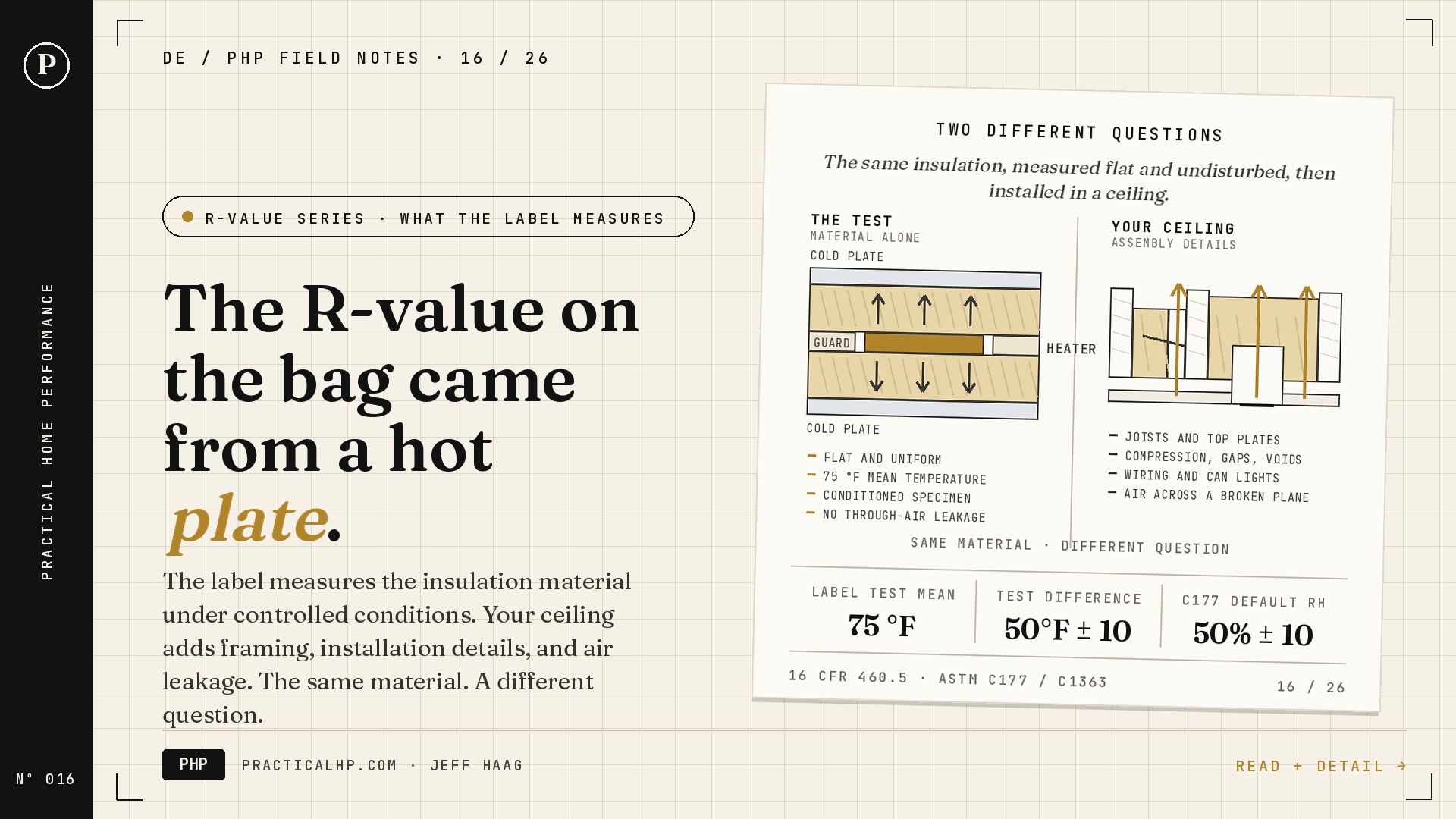
The R-value on the bag came from a hot plate. Your house is not a hot plate.
What the laboratory measures, what the label leaves to the installation, and how framing, moisture, and air control change the questions worth asking.

Field Note · Insulation · Air Movement · Gulf South
When air moves through insulation.
Where convective looping matters, why installation quality counts, and what to fix.
Field Note · Attic Moisture · Whole-House Diagnosis
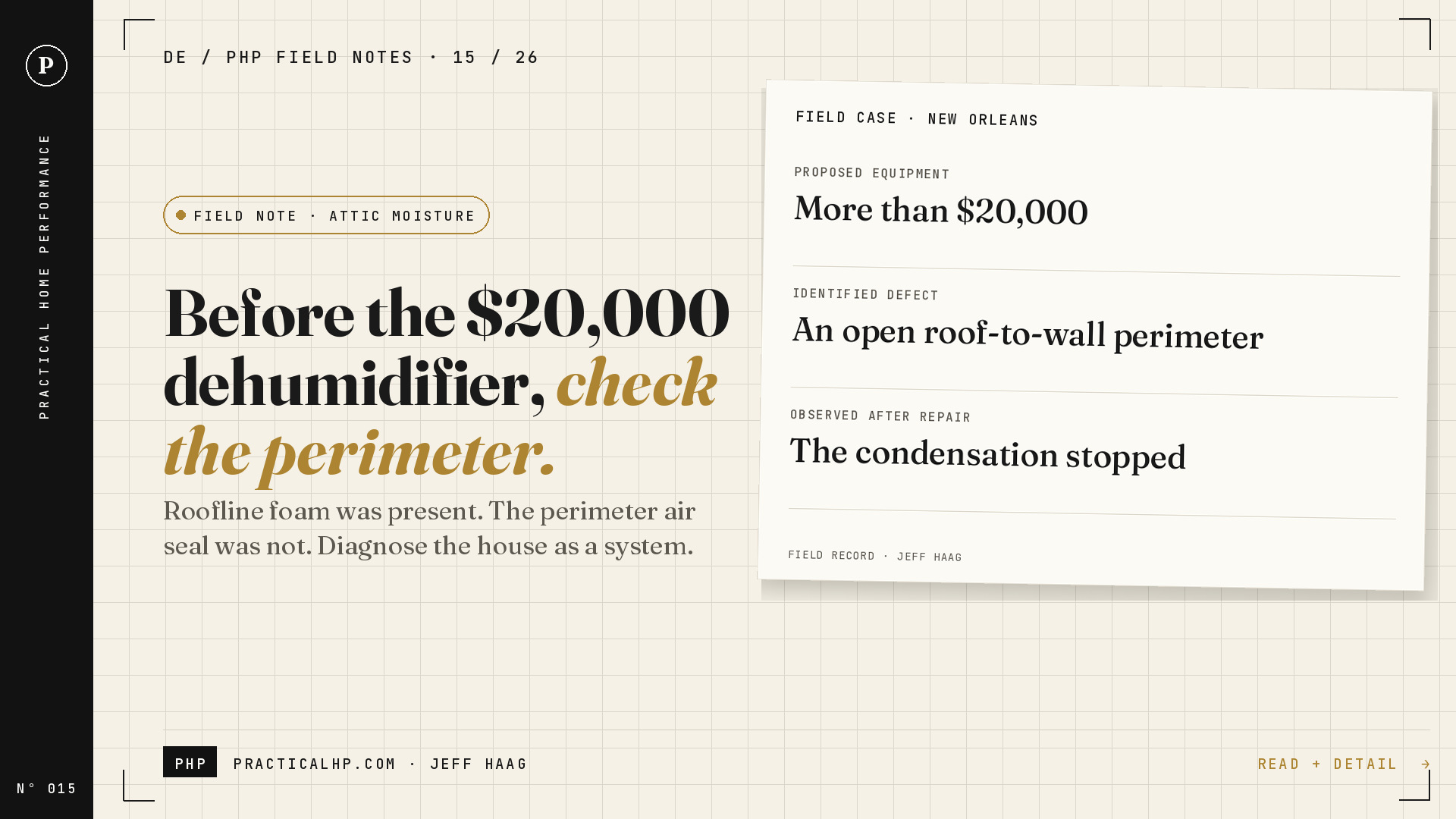
Before you’re sold a $20,000 attic dehumidifier. Check the perimeter first.
Roofline foam was present, but the perimeter air seal was not. A New Orleans field case with repair photographs, the original hallway monitoring record, and verified technical context.
Field Note · Cause, Not Symptom · Duct Moisture
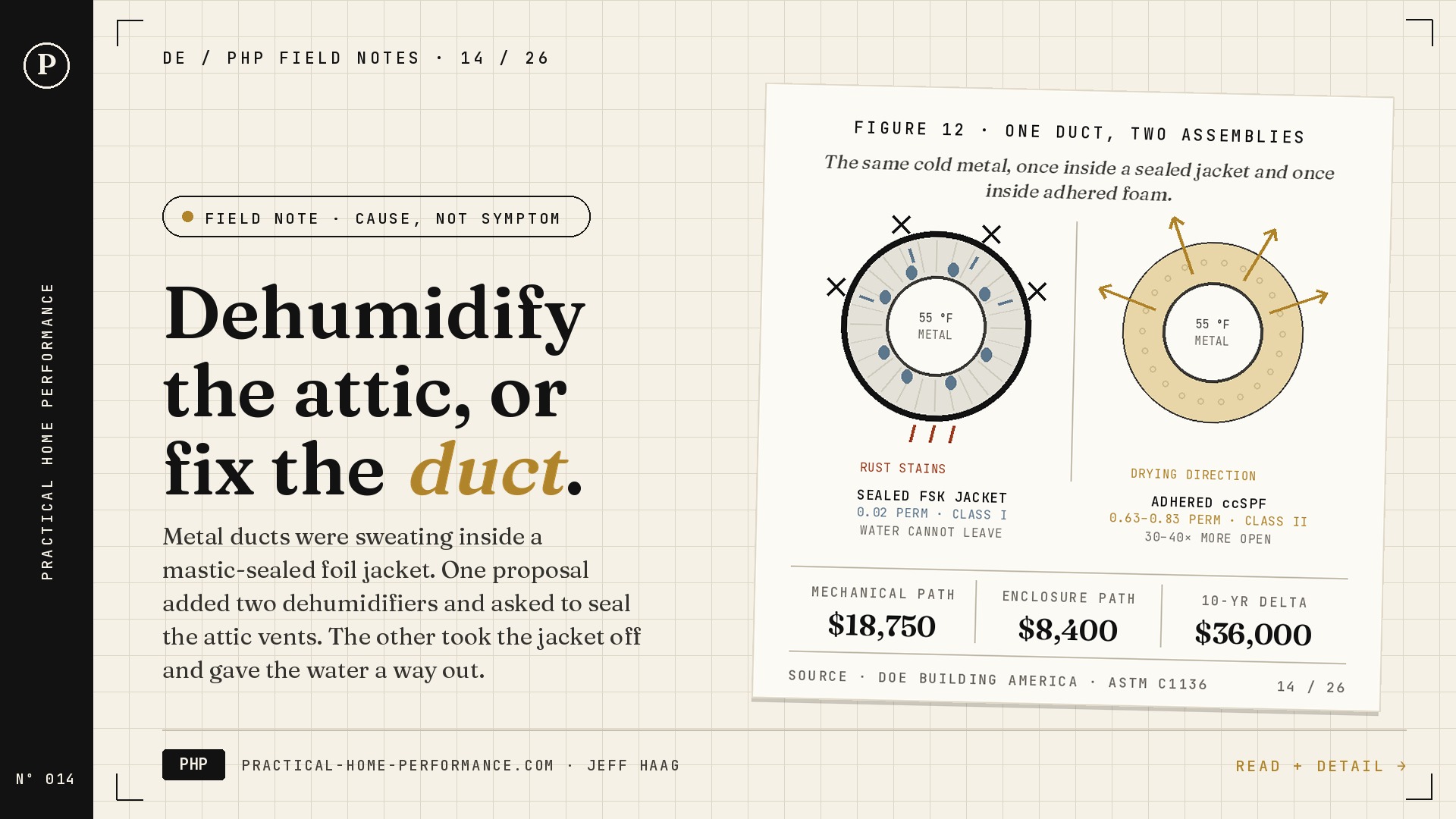
Sweating Ducts in a Vented Attic: The $18,750 Machine and the $8,400 Enclosure Fix
Rigid metal ducts in the attic of a historic Algiers Point house kept sweating through a brand-new foil-faced wrap that had been mastic-sealed as tightly as anyone could seal it. One proposal added two ducted dehumidifiers, asked to seal off the attic ventilation, and carried a maintenance agreement to keep the warranty alive. The other took the jacket off and gave the water a way out. Latent load, nameplate capacity at real attic temperatures, and ten-year cost, computed.

Field Note · Moisture · Raised Floors
The physics were always going to win. Nobody ran the numbers.
Open-cell spray foam under sheet vinyl in an air-conditioned Gulf Coast raised house is a moisture trap. LSU and the USDA Forest Products Lab measured 20% subfloor moisture in exactly this assembly — and a five-line perm calculation would have flagged it before the first can was mixed.
Field Note · Crawlspace Ventilation · Gulf South
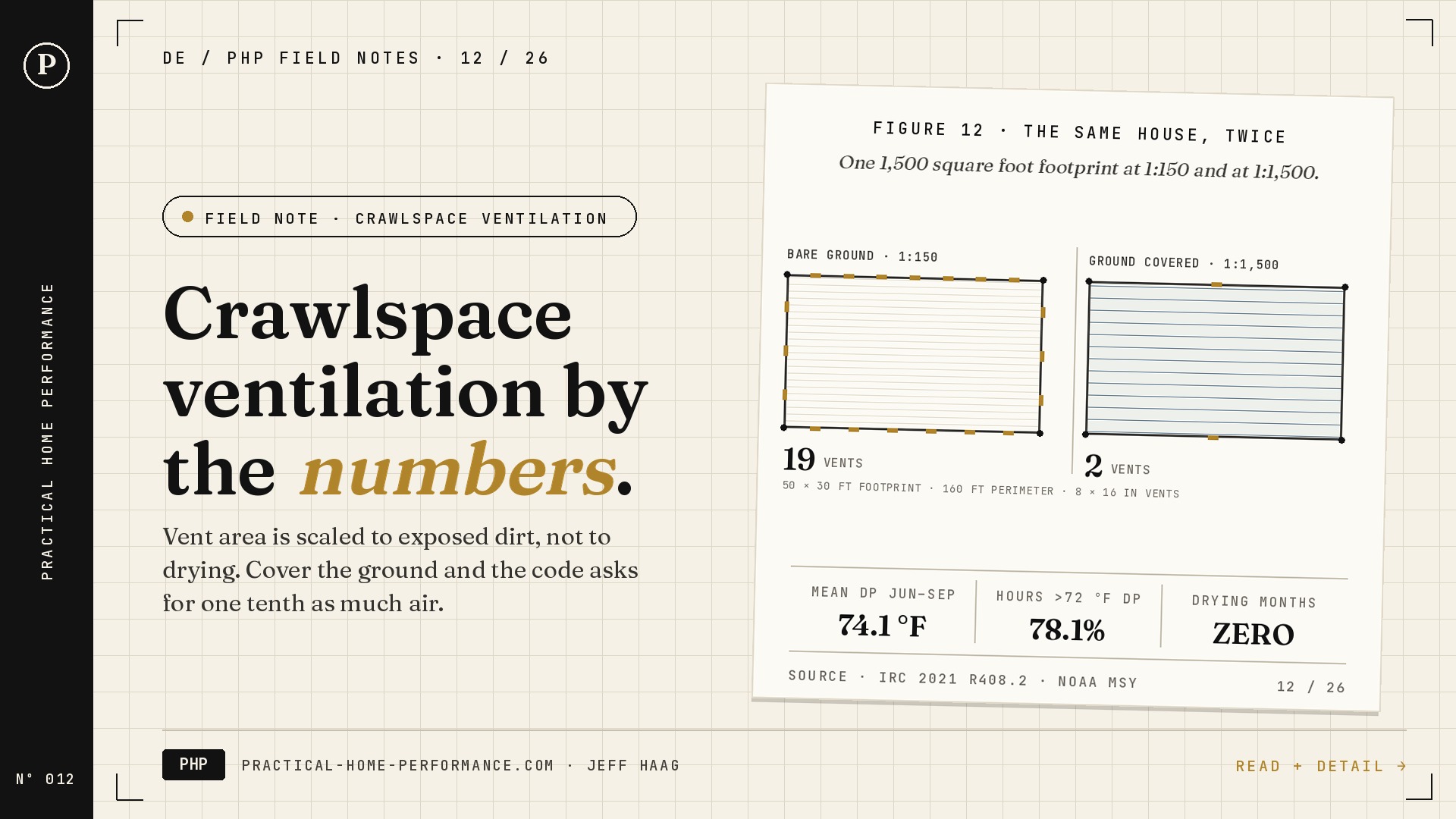
Crawlspace ventilation by the numbers.
Vent area in the code is scaled to exposed dirt, not to drying. New Orleans summer air runs a 74.1 °F mean dew point and sits above 72 °F for 78.1% of hours, so there are no drying months to ventilate with — and a 1,500 square foot footprint needs 19 vents bare or 2 once the ground is covered.
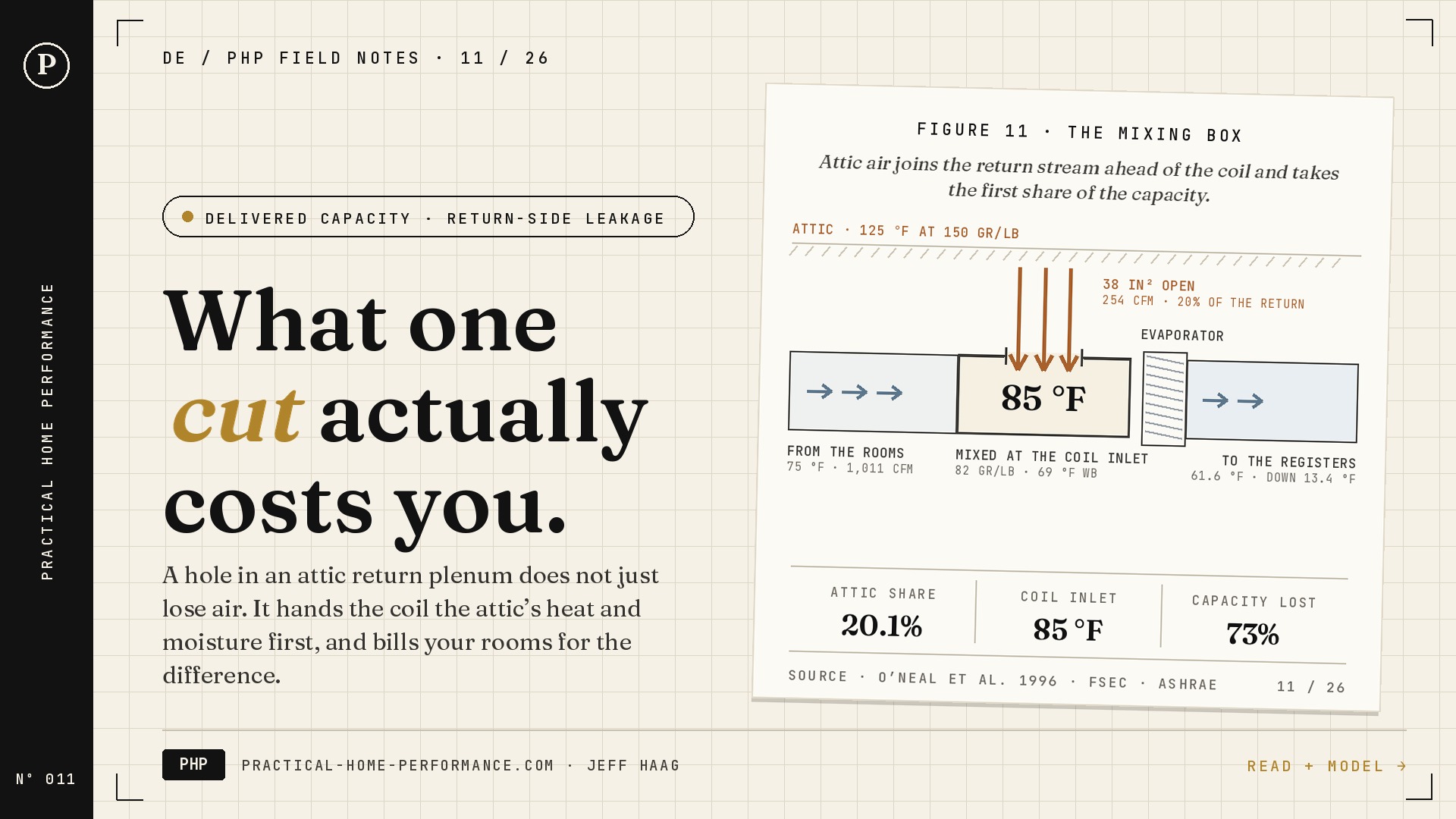
Delivered capacity · Rail 03 · Losses
The return plenum hole: what one cut actually costs you.
Photographed holes in return plenums in New Orleans attics, then worked through the physics and reconciled it against Texas A&M psychrometric-room data. The answer is not in percentages of leakage — it is in delivered tons, which is the only number that matters to the room you are standing in.

Field Note · Crawlspaces · Insulation · Gulf South
One year, twelve houses, six ways to insulate a subfloor.
Between October 2008 and October 2009, LSU AgCenter and USDA-FPL researchers instrumented twelve occupied Louisiana houses and monitored subfloor moisture for a full year. Six insulation systems went in. Two kept subfloors safely dry in every combination. Four did not. Sixteen years later, nothing bigger has been built on top of it.

Field Note · Delivered Capacity · Distribution · Gulf South
Four percent of slack costs you a third of your air
Pulled drum-tight, flexible duct moves air within about two percent of rigid sheet metal. Leave ten inches of extra length in a twenty-foot run and a six-inch branch drops from roughly 110 CFM to roughly 70 — a defect that is invisible from the attic hatch and forgiven by the design tables.
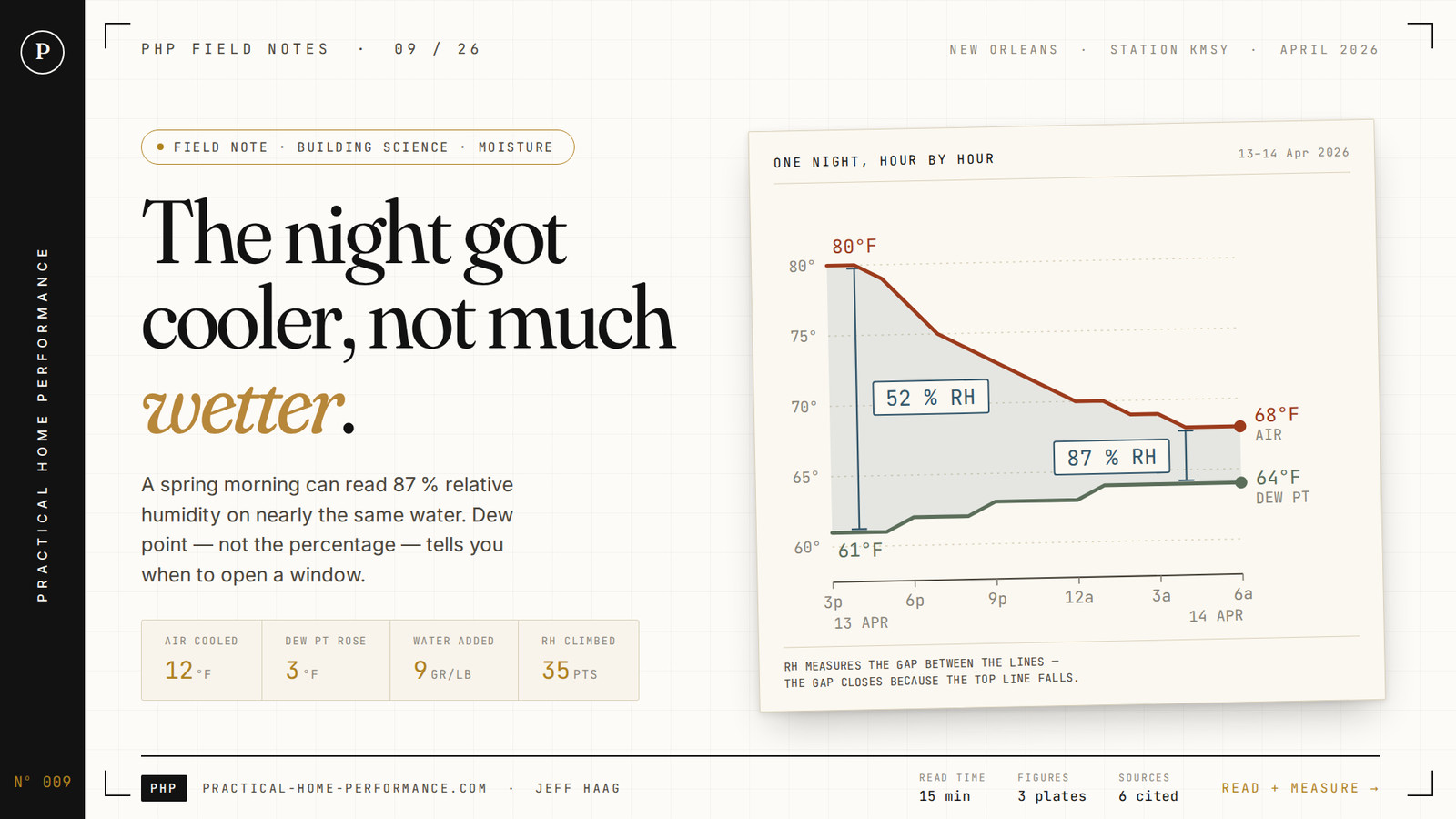
Field Note · Building Science 201 · Moisture · Gulf South
The dew point doesn't drop with the thermometer.
A cool Gulf South morning can read 87 % relative humidity without much more water in the air. Dew point is the number that tells you whether to open the window — and why the percentage is mostly telling you what time it is.
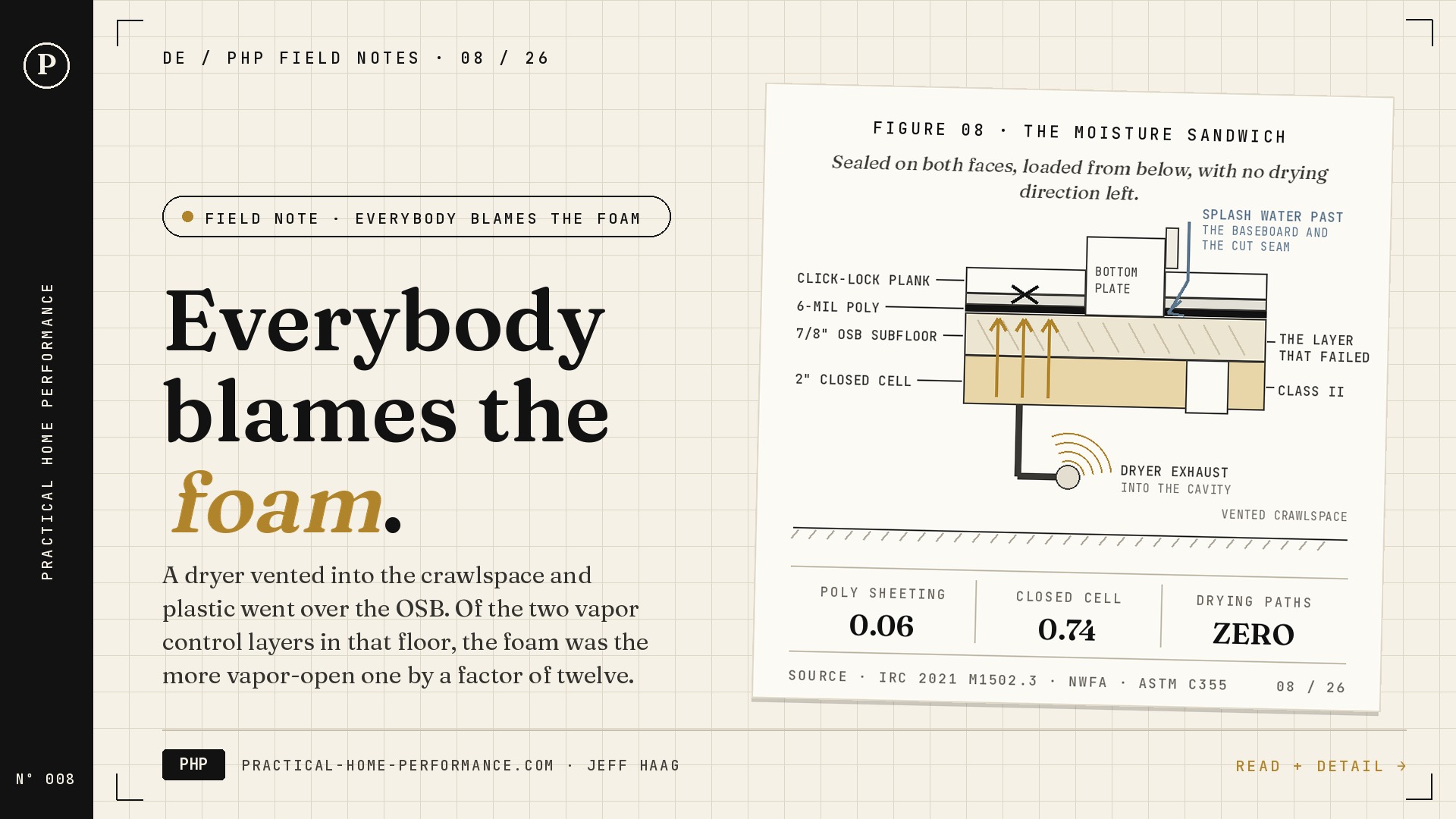
Field Note · Everybody Blames the Foam · Moisture Forensics
Everybody Blames the Foam. The Dryer Was Venting Into the Crawlspace.
A newly built New Orleans house lost flooring in a bedroom and a bathroom, and the closed-cell spray foam under the subfloor was assumed to be the cause. The record points somewhere else: an OSB panel sealed on both faces with no drying direction left, underlayment cut at every bottom plate, and a clothes dryer discharging roughly a gallon of water per load directly beneath the floor. Layer by layer, with perms.

Field Note · Insulation · RESNET · Louisiana
RESNET Grades I, II, and III: What They Actually Look Like in a Real Louisiana Attic.
A former RESNET-certified Energy Rater’s field notes on the standard nobody enforces the way they think they do. What Grade I actually requires, where the standard is generous, where installers get surprised, and why the pending Addendum D-202x is the wrong direction.
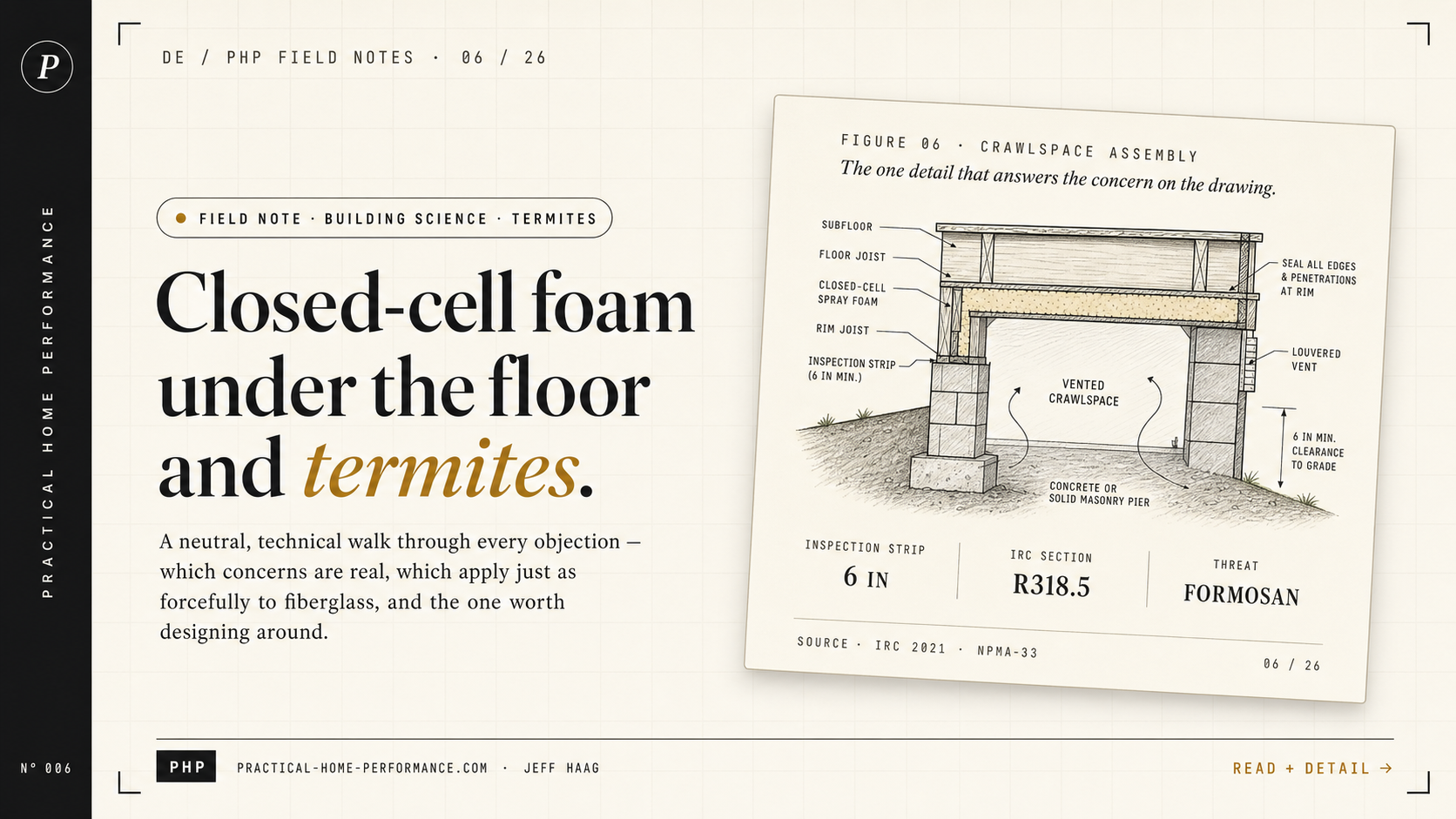
Field Note · Insulation · Gulf South
Closed-Cell Foam Under the Floor and Termites: Walking the Concerns, One by One.
A fair, plain-spoken walk through every objection raised about closed-cell foam under a crawlspace subfloor — which ones are real, which apply to fiberglass and no insulation just the same, and which single concern actually deserves the conversation.
Field Note · Building Science · Moisture
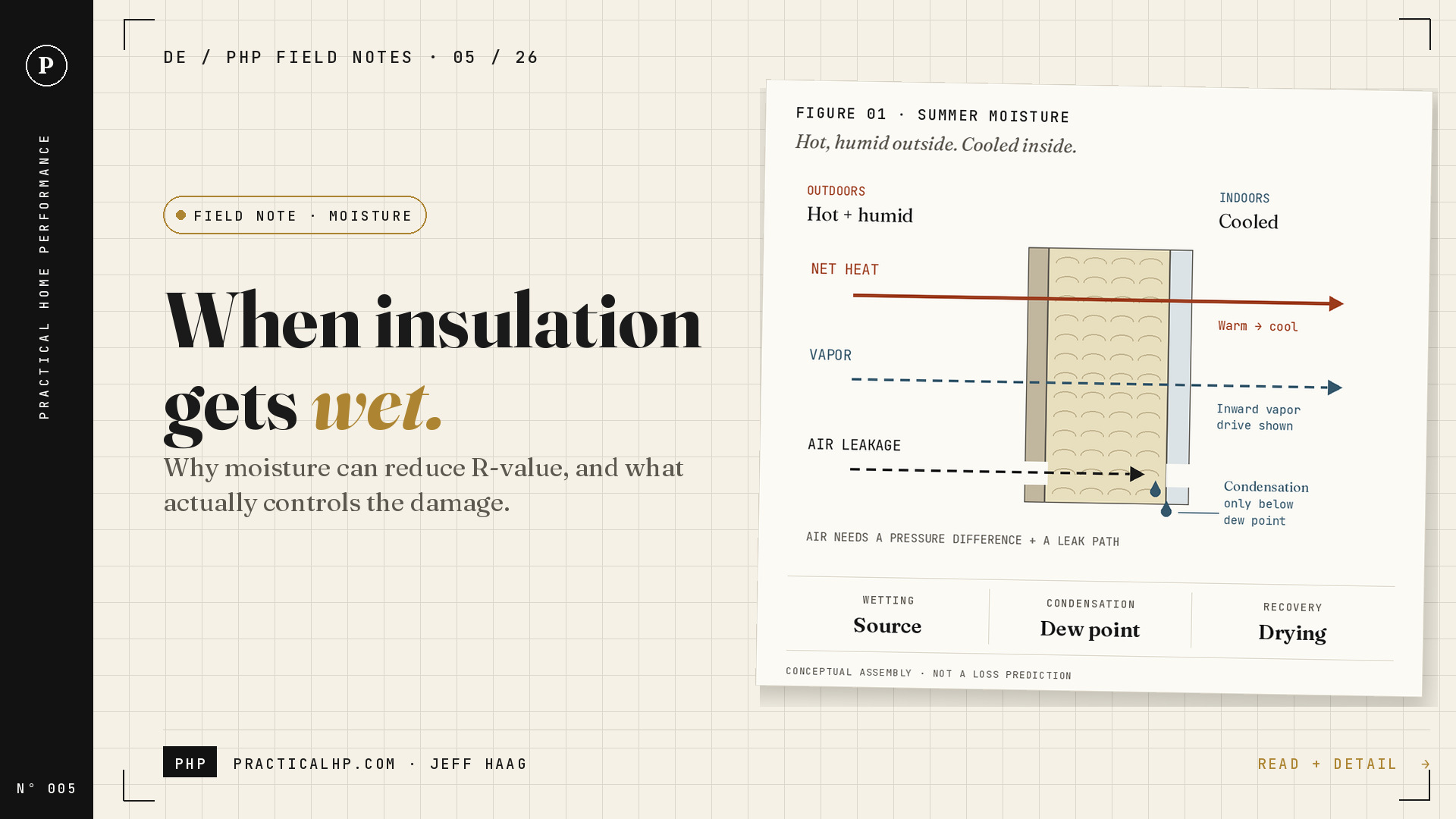
How Moisture Reduces R-Value
What the wet-insulation research actually shows, why the location of wetting matters, and how heat flow, moisture entry and drying interact in Gulf South homes.

Field Note · Building Science · Airflow
Powered Attic Ventilators: The Physics Behind the Ban
A whole-house pressure, moisture, and combustion-safety deep dive for Gulf South practitioners. Why one state banned them, ENERGY STAR refuses to certify them, and DOE doesn’t recommend them — the physics forces the conclusion.

Field Note · Code Policy · Deep South
Georgia Drew a Line in 2011. Fourteen Years Later, They’re Still the Only State That Has.
What one state’s quiet code amendment tells us about powered attic ventilators — and why the Gulf South still hasn’t caught up. The story of Section 403.10, the ENERGY STAR exclusion, and the solar carve-out.
Building Science 201 · Energy Code
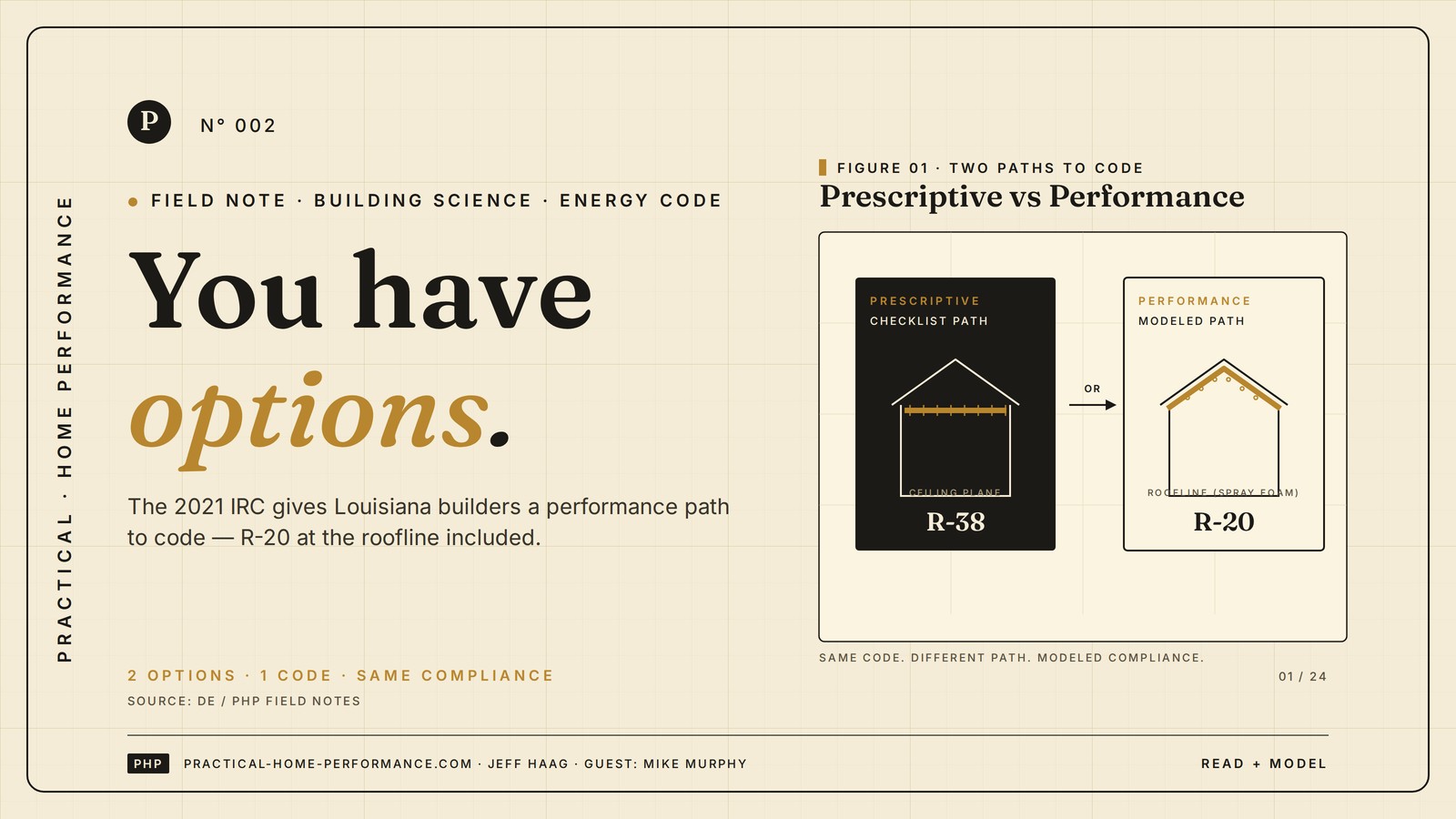
The Performance Path Paradox: Why Building Professionals Have Overlooked a Compliance Option for Decades
Louisiana adopted the 2021 IRC and IECC in 2023, but most architects and code officials still default to prescriptive R-38. Guest author Mike Murphy, RESNET HERS Rater, on the compliance path hiding in plain sight.

Building Science 201 · Airflow
Pressure Imbalances: The Invisible Energy Forces That Move Air Through Buildings
Wind, stack effect, and mechanical systems create pressure imbalances that drive airflow in every home. The building-science story behind the numbers.
Book a consult
Start with a number, not a quote.
A PHP diagnostic gives you the measurements first. Then a written specification. Then — if you want — a referral to a vetted contractor who will build to spec.